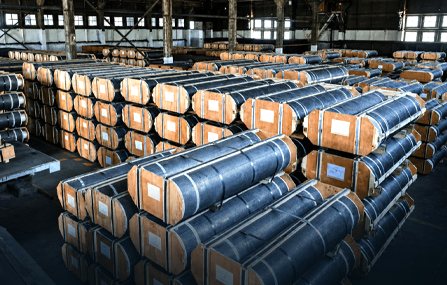
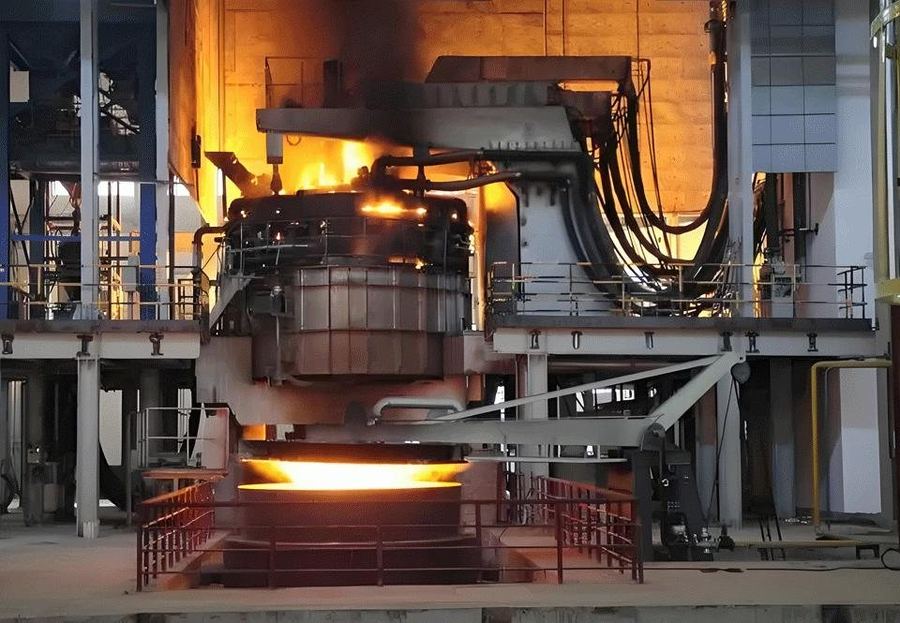
Choosing the wrong electrode grade costs more than a price difference. It shows up as higher specific consumption, breakage-related downtime and increased power consumption per tonne. Here is the decision sequence buyers and process engineers actually use.
What the grade really means
Graphite electrodes are grouped into RP (regular power), HP (high power) and UHP (ultra-high power). The distinction is not about "quality" — it is about how much current density and thermal shock the electrode can withstand. Higher transformer capacity and input power demand lower resistivity, higher bulk density and better thermal-shock resistance.
- RP — regular-power EAFs, ferrosilicon and phosphorus smelting; cost-driven applications.
- HP — high-power EAFs and ladle furnaces (LF); a balance between consumption and price.
- UHP — ultra-high-power EAFs, typically above 25 A/cm²; requires low resistivity, high density and a low CTE.
Three specifications to verify
1. Resistivity. It governs self-heating and electrical losses. Our measured values for UHP electrodes are 5.0–6.0 μΩ·m, HP around 6.5–7.0 μΩ·m and RP around 8.0–9.0 μΩ·m. Lower values generally indicate more complete graphitization and lower power consumption.
2. Bulk density and bending strength. These drive thermal-shock resistance and resistance to breakage. UHP electrodes measure about 1.68–1.73 g/cm³ and 14–16 MPa, with nipple values typically higher because the joint is where stress concentrates.
3. Coefficient of thermal expansion (CTE). A lower CTE means less dimensional change during rapid heating and cooling. UHP electrodes measure roughly 1.3 ×10⁻⁶/°C, well below conventional grades.
Measured reference ranges for electrode bodies. Nipple specifications differ; the inspection report of the actual batch governs.
Sizing the diameter
Diameter follows allowable current. For Φ400mm, RP carries about 18,000–23,500 A, HP 24,000–32,000 A and UHP 25,000–40,000 A. Derive the operating current from furnace and transformer data first, then check the allowable-current table with a sensible margin — do not size on furnace dimensions alone.
Common mistakes
- Comparing unit price only. A cheaper grade can cost more per tonne of steel once consumption and downtime are included. Evaluate "specific consumption × price + downtime cost".
- Mismatched nipples. Nipples must match electrode grade and size; mixing is a frequent cause of breakage.
- Ignoring batch consistency. A stable process matters more than a single impressive test result.
Procurement checklist
- Furnace type (EAF / LF), transformer rating (MVA), typical operating current
- Steel grades and tap-to-tap cycle
- Target electrode diameter, length and nipple specification
- Target specific electrode consumption and kWh/t
- Monthly volume, destination port, packing requirements
Send these to our team and you will receive a grade and diameter recommendation plus a quotation within 24 hours. Full tables are on the specifications page.